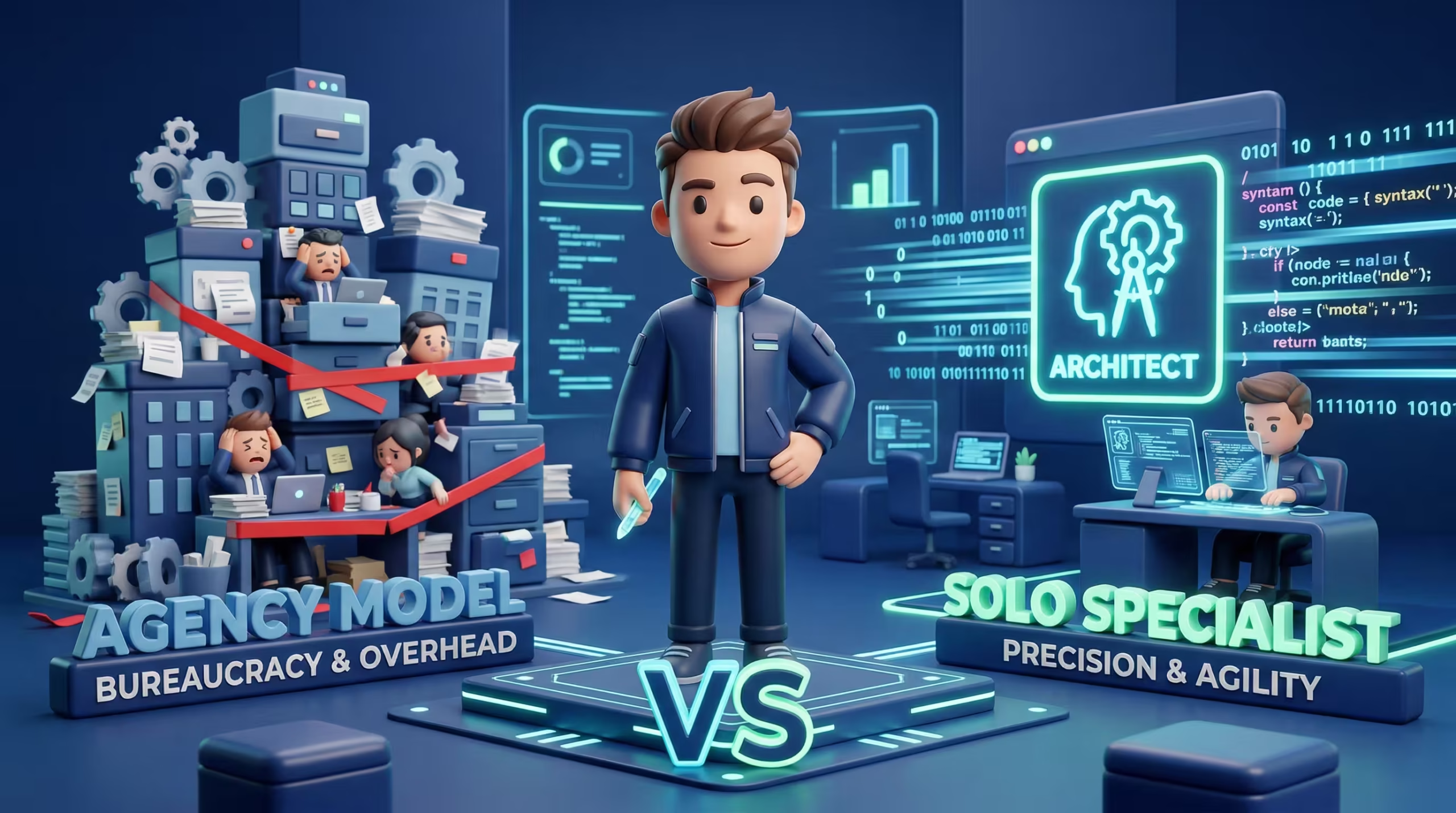
In my 20+ years of experience architecting WordPress websites, I have seen that the most critical decision for a CTO isn’t the stack, but the talent, specifically whether to hire a Senior WordPress Developer or a bloated digital agency. Today, marketing directors are often paralyzed by this exact procurement dilemma.
You have a solid budget approved for a digital transformation, and the mandate is clear: rebuild the core platform for better performance, tighter security, and scalable infrastructure. The immediate question is whether to hand a massive retainer to a global agency or partner directly with an independent technical expert who actually writes the code.
The stakes are high because making the wrong procurement choice means burning capital on management fees rather than actual code quality.
If you want direct control over the architecture without the bureaucratic red tape, hiring a dedicated Senior WordPress Developer is the most strategic move for agile execution in this year.
This approach ensures your budget is spent on engineering excellence rather than agency overhead. Let us break down the operational realities of both models so you can protect your ROI and eliminate technical debt from day one.
The Digital Agency Model: Pros, Cons, and Hidden Overhead
A digital agency model in B2B web development is a multi-tiered service structure where a single project is distributed across distinct departments, including sales, account management, design, and engineering. This model provides the illusion of safety through sheer headcount. Business owners often feel secure seeing a team of ten people assigned to their project dashboard.
Agencies do excel in one specific area: handling massive, multi-channel marketing campaigns that require simultaneous PR, offline media, and ad buying alongside the website build. If your project is heavily weighted toward broad brand strategy rather than complex technical architecture, an agency provides a single vendor for all those external services.
The reality of this structure for pure web development reveals significant operational inefficiencies. The most critical flaw is the communication bottleneck. When you request a complex database architecture shift or a specific REST API integration, you rarely speak directly to the person writing the code. Your request goes to an Account Manager, who translates it to a Project Manager, who then puts it into a sprint ticket for a junior developer to execute. Every layer of translation dilutes the original technical requirement and adds days to the deployment cycle.
Then there is the issue of website overhead costs. Agencies operate with massive operational expenses. They maintain premium office spaces, fund aggressive outbound sales departments, and pay salaries for administrative staff who never touch your codebase. Your project budget absorbs all of these costs. You might sign a $50,000 contract, but only a fraction of that capital is actually invested in engineering the performance, accessibility, and security of your platform. The rest simply pays for the agency infrastructure to exist. You are funding their operational bloat rather than buying superior technical expertise.
The Solo Architect: Why Agility Wins in Modern Web Development
A solo web architect operates as a direct technical partner, eliminating middle management to deliver faster deployment cycles and agile execution compared to multi-tier agencies. When you hire an independent expert, you speak directly to the engineer building your database structure. There are no account managers playing a game of broken telephone with your core business requirements.
We must draw a hard line regarding terminology. Business owners often confuse a highly specialized technical consultant with a standard wordpress developer freelancer found on generic gig platforms. A typical freelancer often relies on bloated pre-made themes and basic plugin configurations to deliver a quick visual result. A senior architect engineers custom enterprise solutions from the ground up, manages complex server infrastructure, and ensures strict security and accessibility compliance.
The primary business advantage of the solo architect model is speed of execution. In a corporate environment, time is capital. If a CTO needs a custom API endpoint adjusted or a critical database query optimized, they communicate the requirement directly to the architect. The code is written, tested, and pushed to the staging environment within hours. An agency would require a formal ticket submission, a review by the project manager, and a scheduling delay until the next sprint cycle. Direct access to the person writing the code prevents scope creep and keeps the project tightly aligned with your immediate business goals.
The “White Label” Secret: Who Actually Builds Your Agency Website?
White-label web development is a standard B2B practice where a digital agency subcontracts the technical coding to an independent specialist while branding the final website as their own in-house work. I have seen the inner workings of global agencies firsthand. Clients sign massive contracts expecting an internal team of senior engineers to meticulously craft their digital platform.
The brutal truth is, when you pay an agency $15,000 for a website, $10,000 goes to account managers, fancy office rent, and overhead. The actual coding is often outsourced to a solo WordPress developer anyway.
The agency essentially acts as a high-margin middleman. They manage the client relationship, handle the initial discovery calls, and then quietly pass the technical execution to an external contractor. I detailed the exact mechanics of how agencies build these subcontractor networks in my previous guide on Scaling White Label WordPress Infrastructure for Agencies.
Understanding this industry secret completely shifts the procurement strategy for B2B companies. You are often buying the exact same code whether you hire the agency or the solo architect. By bypassing the agency wrapper and hiring the architect directly, you secure top-tier engineering talent without funding the agency’s operational bloat. You retain full budget efficiency and gain direct communication with the person who actually understands your server architecture.
Analyzing the Cost vs. Value Ratio
Web development ROI in B2B procurement is calculated by measuring the direct capital investment in functional code quality and server infrastructure against the capital lost to management overhead. When you analyze the cost versus value ratio between an agency and a solo architect, the financial dynamics become immediately clear. You are not paying for better technology at an agency; you are paying for their operational existence. My approach focuses on stripping away those administrative layers so every single dollar of your budget goes into security protocols, core web vitals optimization, and scalable database architecture.
Corporate leaders often fail to calculate the hidden cost of slow communication. If your marketing director needs to wait three weeks for a simple landing page integration because the agency’s sprint calendar is full, your business loses market agility. A direct partnership with an architect allows for immediate pivots. The visualization below breaks down the exact operational matrix you must consider before signing a procurement contract.
What to Look For in a Professional WordPress Developer Website
Evaluating technical competence requires auditing the underlying architecture of a professional wordpress developer website for clean DOM structure, strict accessibility compliance, and optimized server routing. Visual design is a commodity that can be easily purchased or replicated by junior designers. The true test of a reliable B2B partner is what happens beneath the surface. When inspecting a potential vendor, you must look past the flashy animations and examine their source code directly.
A poor foundation immediately generates massive technical debt for your business. If you hire an entity that relies on heavy page builders with infinitely nested DOM elements, your company will pay the price in inflated server costs, poor user experience, and lost search engine rankings. You need an architect who understands database query optimization, native React integration, and modern CSS Grid layouts.
I frequently conduct audits for enterprise clients, and the lack of basic semantic HTML implementation by so-called premium agencies is alarming. I have documented this specific architectural failure extensively in my guide on Semantic HTML5 and Microdata in Elementor: B2B Guide. Your vendor’s own digital presence is their true resume. If their own platform fails Google’s Core Web Vitals assessment or lacks WCAG 2.2 accessibility standards, they will absolutely fail to implement those critical standards on your enterprise project.
Final Verdict: When to Hire an Agency vs. a Dedicated Specialist
Hiring a digital agency is ideal for comprehensive multi-channel marketing campaigns requiring simultaneous PR and media buying, whereas partnering with a dedicated specialist is the superior choice for strict technical architecture, agile deployment, and maximum budget efficiency.
As a business owner or CTO, your procurement decision dictates the long-term financial health of your digital infrastructure. If your organization requires a vendor to handle billboard advertising, social media management, offline activations, and broad brand strategy alongside a basic website layout, an agency makes sense. You pay a premium for the convenience of centralized billing for entirely different marketing disciplines.
If your core requirement is a high-performance, secure, and accessible enterprise platform, hiring a solo technical architect is the logical business move. You immediately strip away the operational bloat. Your capital is invested directly into clean code, rapid execution, and seamless communication. You avoid the trap of funding an agency’s expensive office space and layered management hierarchy. By working directly with the engineer, you prevent technical debt before a single line of code is written and ensure your platform is built for scalable growth. You get exactly what you pay for: elite, unfiltered technical execution.
Frequently Asked Questions (FAQ)
Is an independent developer scalable for enterprise projects?
What happens to maintenance and support after launch?
How do solo architects handle tight launch deadlines?

Initiate Secure Comms
Join elite B2B founders receiving my private WordPress architecture blueprints directly to their inbox. No spam, pure engineering.